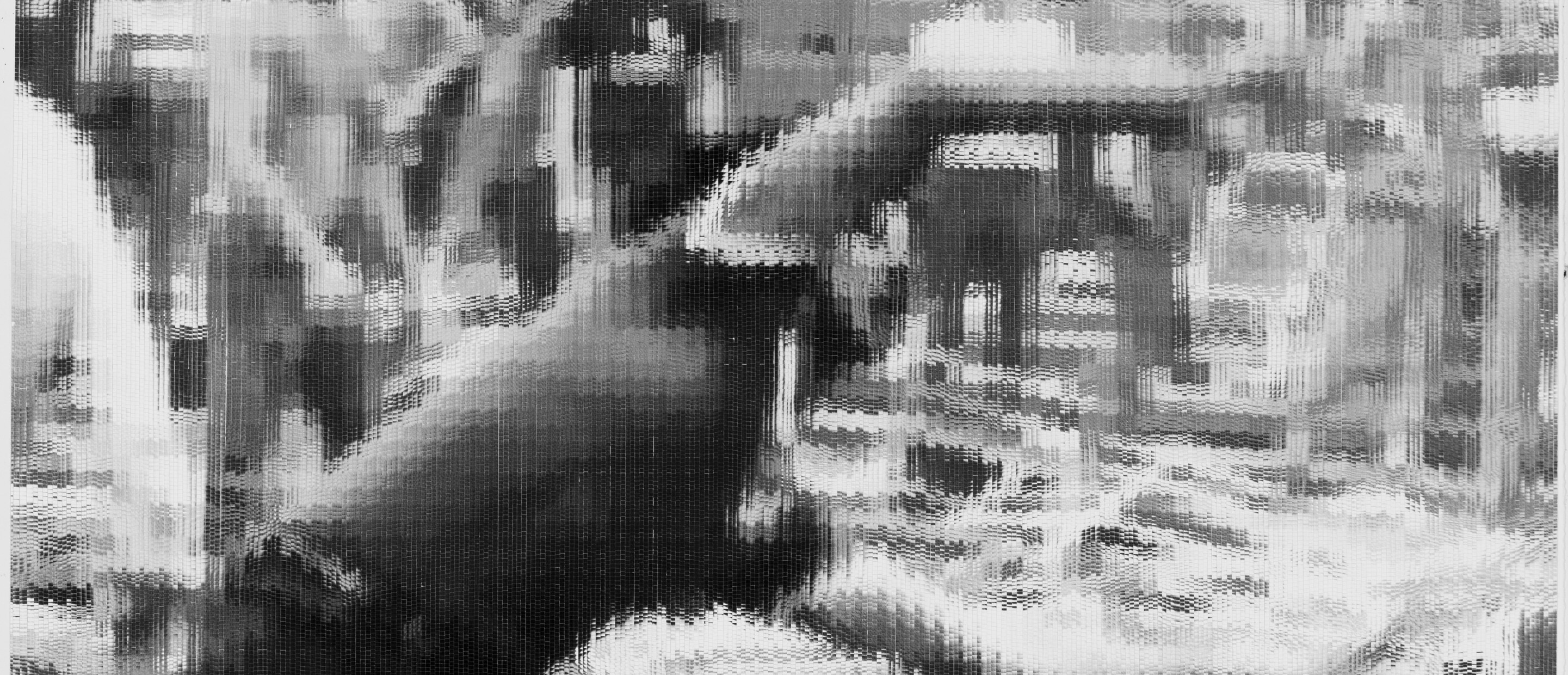
Claremont, CA—The Benton Museum of Art at Pomona College is thrilled to present the first survey exhibition of the work of John Sparagana. On view from February 21 to June 28, 2026, Interference Patterns brings together nearly 100 works by the Houston- and Chicago-based artist to consider his unique practice of collage—the meticulous and large-scale remixing of source material drawn from magazines, comic books, artists’ books, news images, the history of art, and his own exhibition catalogues. Sparagana’s intricate process and thoughtful yet improvisatory manipulations ultimately work to reveal the inherent vulnerability of mass media images.
“Interference Patterns is a full-circle moment for the Benton,” said organizer Solveig Nelson, PhD, the museum’s curator of photography and new media. “Back in the early 1970s, Helene Winer was the curator at Pomona’s Montgomery Art Gallery (a precursor to the Benton) and an early champion of an unofficial group of artists who came to be known as the ‘Pictures Generation.’ These artists, who included Cindy Sherman, John Baldessari, Jenny Holzer, and Jack Goldstein among many others, created work that responded to the media environment via paintings, films, television installations, and photography. Now, nearly fifty years later, the priorities of the Pictures Generation find their most contemporary expression in Interference Patterns, coupled with Sparagana’s unique process and attention to the sonic aspects of visual forms.”
The exhibition follows the arc of Sparagana’s production, beginning in the early 2000s when the artist started making work based on the materiality of magazine pages. During this period, he rephotographed fashion magazine images that he had altered by casting a shadow over the image or by creating a gaping hole with a keyhole saw—leaving the frayed edges visible—in the center of a page. Included in this exhibition is his Sleeping Beauty series in which, working with double spreads, Sparagana “fatigued” fragments of magazine pages (by folding, rubbing, and otherwise creating friction between discrete parts of each page) until the fibers rose to the surface and interfered with the reproduced image; meanwhile he left some fragments of the double-spread magazine pages intact, thus juxtaposing “perfect” and distressed images. (For this exhibition, Sparagana revisits this body of work with a special commission by the Benton for a new 354-page artist’s book entitled Slow Fade, made in collaboration with designer Reto Geiser.)
Such early works were made following September 11, 2001, when the US government used the coordinated terrorist attack on New York City’s World Trade Center and two other targets as a justification for undermining civil rights domestically and waging subsequent wars in Afghanistan and Iraq. In the words of the artist, this charged political landscape was “a strong emotional mobilizing force for me in initiating and developing the series that followed.” In the mass media, and in Sparagana’s works, representations of revolutionaries, environmental disaster, and unruly crowds swirled amidst fashion advertisements and fantasies of white American masculinity.
As traced in Interference Patterns, Sparagana followed this early work by introducing inkjet reproductions of his source material—as seen in the series Afternoon Hallucinogenic—that allowed him to alter the scale of his source images. His Dazzle series, made in 2008 from metallic paper strips mixed with multiples of fatigued magazine pages, featured celebrities like actor Kathleen Turner and former president Barack Obama. Sparagana began to develop an increasingly intricate practice of slicing his source material into thin horizontal and vertical strips before recombining them by hand in a sequential manner.
Between the Eyes, a series that he also began working on around 2008 that is included in the exhibition, marked a new threshold in Sparagana’s practice. He incorporated multiple source images into a single frame, mixing news photographs of environmental disaster, war, and protests with abstract patterns sourced from famous modernist and Pop art paintings made between the 1910s and the 1960s, from Kazimir Malevich’s monochrome red square to Andy Warhol’s silkscreen of another artist’s photograph of a hibiscus flower, which Warhol repeated as if creating wallpaper. The result was a collision of two visual languages, one rooted in the immediacy of the news and the other in assumptions of universality and timelessness in the history of art. In the equally large-scale Themesong Variations series of 2015, Sparagana explored such recognizable elements from comic books as speech bubbles and gutters between panels. As he sliced, recombined, and rotated fragments of the original comics, the works generated visual stutters that read like pixelations, challenging the stability of conventional perception.
The exhibition concludes with work drawn from multiple series based on one of the most important motifs in his oeuvre—the representation of crowds. The series Projectile from 2017 (plus a new work from 2025) is based on a news image sent to Sparagana by the writer David Grubbs of audience members at a Neil Young concert in the mid-1980s, when Young was performing in electronica mode. After Young concluded the concert prematurely due to illness, some members of the audience catapulted chairs at the empty stage. From the single lo-fi image (sometimes just a fragment of it) that depicts the crowd in the stadium as it begins to erupt, Sparagna made multiple collages in a palette of black, white, and a deeply saturated blue. The Projectile suite is surprisingly intimate, like the experience of watching videos in slow motion. These works and others from the Crowds & Powder series and the sub-series The Revolutionaries from 2013 ask us to consider questions such as whether the feelings that viewers bring to representations of groups are traceable to something concrete within the image itself, or do the feelings depend on whose revolution or suffering we are witnessing? What defines the boundary between an audience and a riot, a protest and a revolution?
Across his now twenty-five-year-old project, Sparagana has sought to shift the focus from what he calls the “informational and instrumental mode” of mass media into a “poetic mode” that increases the agency of viewers. His use of slicing and mixing procedures means that he is never sure how the collages will turn out; in this sense, they are process-driven improvisations, a set of rules or structures that allow for innovation to emerge. The descriptive language of music—such as tonality or vibration—perhaps comes closest to the viewers’ experience of his works. Full of paradoxes, Sparagana’s collages look like digital manipulations but are entirely fabricated by hand. They are made of images designed to be reproduced yet are themselves almost impossible to reproduce in photographs. This exhibition proposes that it is in these “interference patterns” that Sparagana’s larger project becomes visible: the dislodging of such images from their ideological homes, rendering them more vulnerable and less stable.
About John Sparagana
John Sparagana received his MFA from Stanford University in 1987. He is the Grace Christian Vietti Chair in Visual Art and Chair of the Department of Art at Rice University. He has presented exhibitions of his work in New York, San Francisco, Chicago, Houston, Los Angeles, and internationally. Sparagana has been the recipient of numerous awards and fellowships, including from the National Endowment for the Arts, the Cultural Arts Council of Houston, and Cité International des Arts, Paris (through Stanford University). He has published several books, most recently Projectile (Drag City, 2021), a collaboration with David Grubbs and Reto Geiser.
John Sparagana: Interference Patterns is organized by Solveig Nelson, PhD, curator of photography and new media at the Benton Museum of Art, with Max Uehara, post-baccalaureate curatorial fellow. The project was developed in close dialogue with the artist. The Benton Museum of Art is grateful for the organizational support of Corbett vs. Dempsey and Sicardi Ayers Bacino as well as for the generosity of private lenders.
Funding support for this project has been provided by the Eva Cole and Clyde Matson Memorial Fund and the Janet Inskeep Benton ’79 Endowed Fund.
RELATED EVENT
Opening Celebration
Saturday, February 28
2 to 4 pm
An opening event and reception will feature a live musical performance by MacArthur Fellow and saxophonist Ken Vandermark. Registration is required to attend.