Study the cultural significance and societal effects of science and technology.
Science, Technology and Society (STS) majors and minors explore the effects of science and technology through historical, philosophical and social science lenses.
STS is about knowledge-making practices, so majors take four courses in math, science or engineering to engage in those practices directly.
Other courses may cover concepts like health, disease and disability; policy analysis of technology; the culture of the laboratory; theories of race and genetic engineering; and social networking and the internet.
You’ll choose an elective concentration in a science, an engineering practice, a cognate discipline (philosophy, anthropology, etc.) or an STS issue like policy problems or technological controversies. A final senior seminar includes an independent research project.
What You’ll Study
- An interdisciplinary overview of key STS themes
- One course from each of the three main branches of STS: History, Philosophy, and Social/Cultural/Political studies of science and technology
- Choose one of those branches, and take three more courses to develop your expertise in that area of STS
- Three courses from a STEM major (science, math, or computer science)
- Two STS electives
- A senior seminar with an independent project
Learning at Pomona

Discovery, Invention and Progress
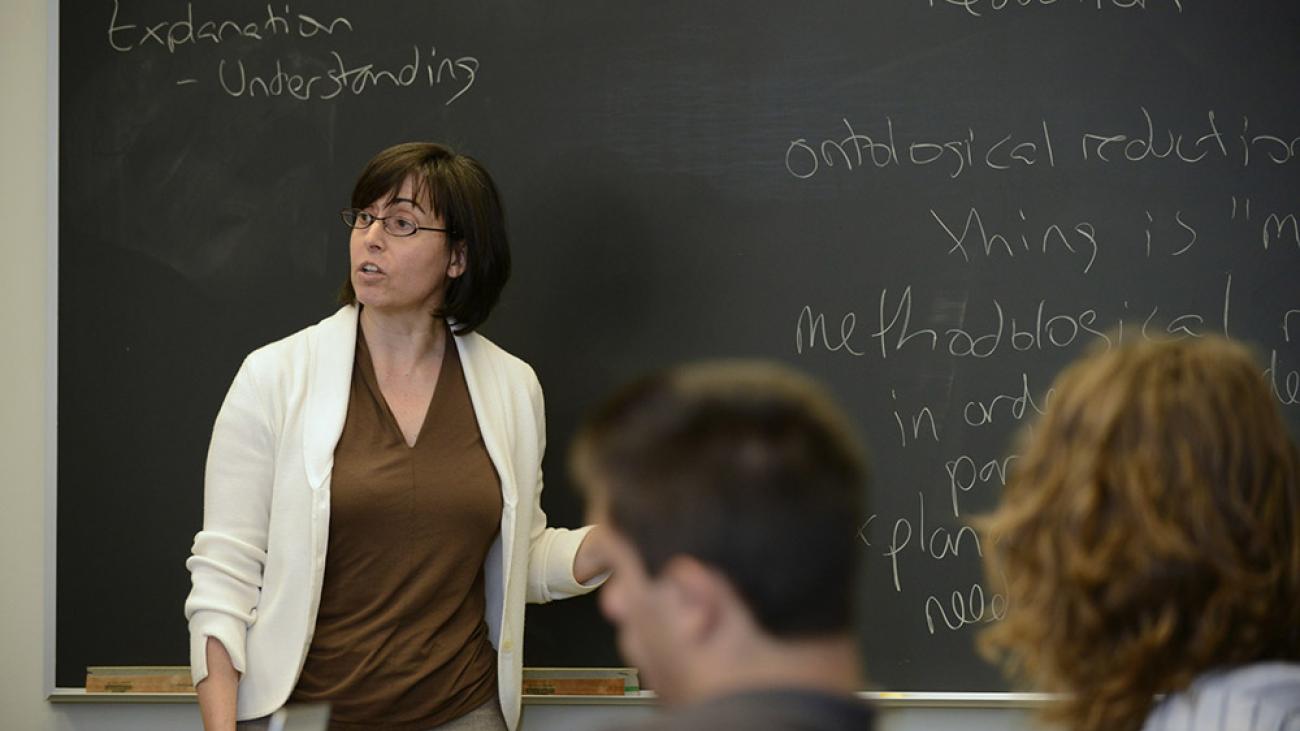
Adelina Grotenhuis ’28 found fascinating discussions of the ethical perspectives on gene editing and the theory-ladenness of observation in Prof. Laura Perini’s Discovery, Invention and Progress: Philosophy of Science and Technology class

At Pomona, my coursework and projects in STS allowed me to connect my clinical experiences to broader ideas about healthcare systems and technology. Courses with professors Lauren Perini and Julie Tannenbaum especially shaped how I think about knowledge, evidence and the role of science in society.