Leadership, Access and Belonging: Inside the AVID Conference at Pomona College

A teacher leads a lecture

A buzz of nervous excitement echoed through Edmunds Ballroom as hundreds of high school freshmen filed into seats, notebooks in hand, their futures on their minds.

For many attending the AVID 9th Grade Leadership Conference, stepping onto Pomona’s campus was not just a field trip but a glimpse of what their lives could be like after high school.

This experience for high school students was established through a partnership with Pomona College’s Draper Center, the Orange County Department of Education and AVID, a college-readiness system implemented at California schools to help students prepare for and succeed at four-year colleges.

The conference took place over two Fridays in February and brought to campus more than 650 ninth graders from Orange County schools for meaningful conversations, practical knowledge and preparation for the future.

In a single day at Pomona, students learned about goal setting, financial aid and more. Most importantly, they left with the confirmation that spaces that once felt distant or unknown are within reach.
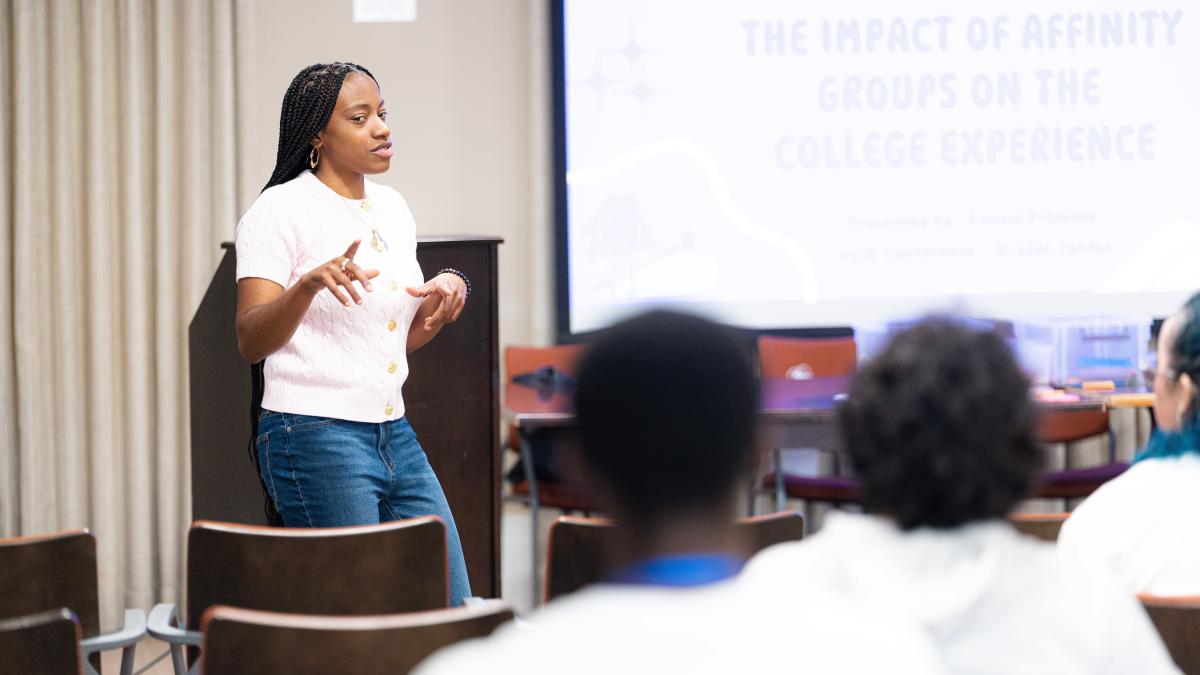
A staff member talks to students

Residence Life Coordinator Kimani Francois explained the impact of affinity groups on the college experience.

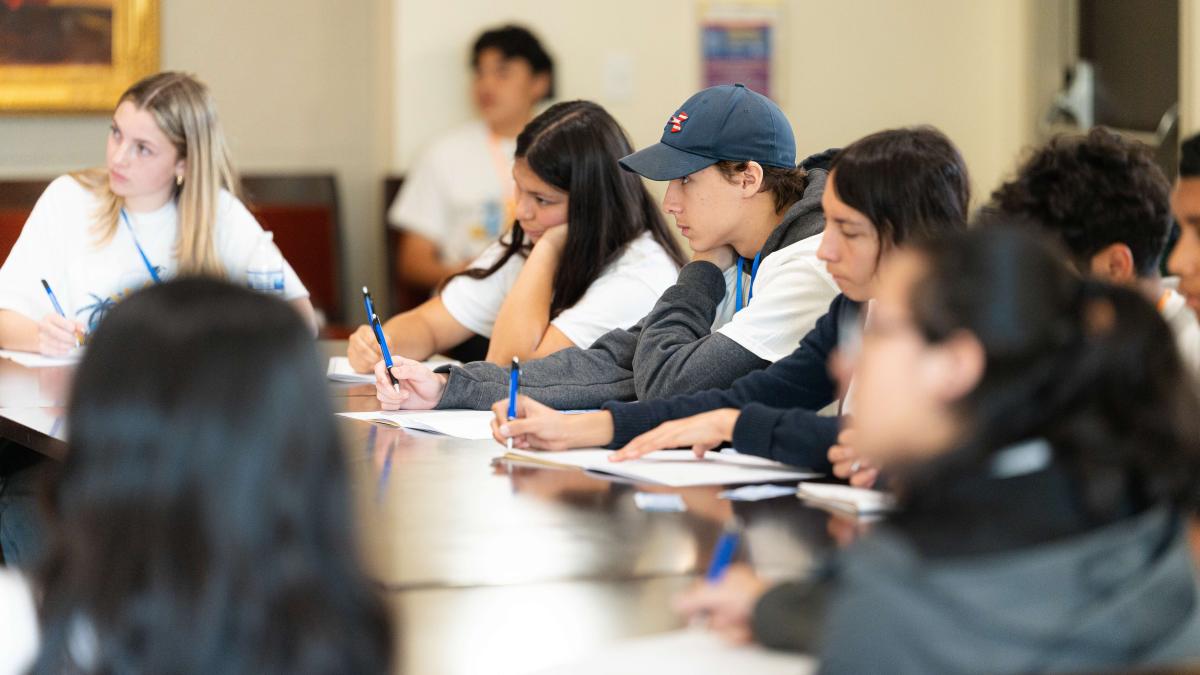
Students listen in on lecture

Orange County high school students take notes during a lecture at the AVID 9th Grade Leadership Conference.

Andres Aguilar, assistant director of educational outreach, oversees the Draper Center’s education programs and organized the conference, which exemplifies Pomona’s commitment to access, equity and community engagement.

“The vision is to provide leadership exposure so students can start getting ready for college,” he says. “Ninth grade is when students really start thinking, ‘Oh wow, I only have four years to see what’s next.’”

Denise Harshman, coordinator of advancing learning for the Orange County Department of Education, says students need to know early “what is out there and what it takes to get there.”

The conference serves as both an inspiration and reality check for students, showing them that college dreams are achievable, but preparation matters.

One of the conference’s most powerful elements is simple: exposure.

Many California high schools heavily promote the state’s two public university systems, while private liberal arts colleges often remain outside students’ awareness. Many students initially only consider colleges they have heard of through sports or proximity, Harshman says.

And, for some families, the sticker price discourages exploration.

However, through workshops that explain financial aid, students learn that institutions like Pomona are more affordable than they appear on paper. Pomona College is one of a handful of institutions committed to meeting the full demonstrated need of all students who are eligible for need-based financial aid, without loans.

Additionally, visiting a small liberal arts campus introduces students to a different educational model—one where smaller class sizes and tight-knit communities prevent them from “getting lost in the crowd,” Harshman adds.

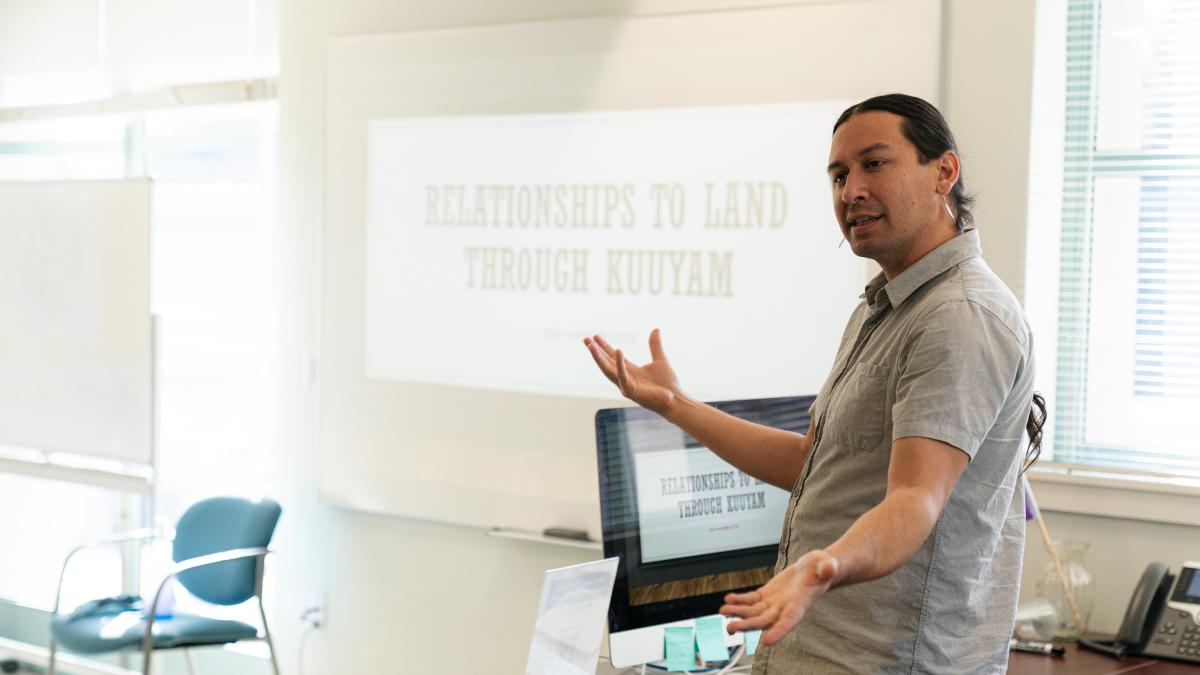
An administrator talks to a class

Joshua Thunder Little, assistant director of the Native Indigenous Resource Center, discussed cultural awareness.

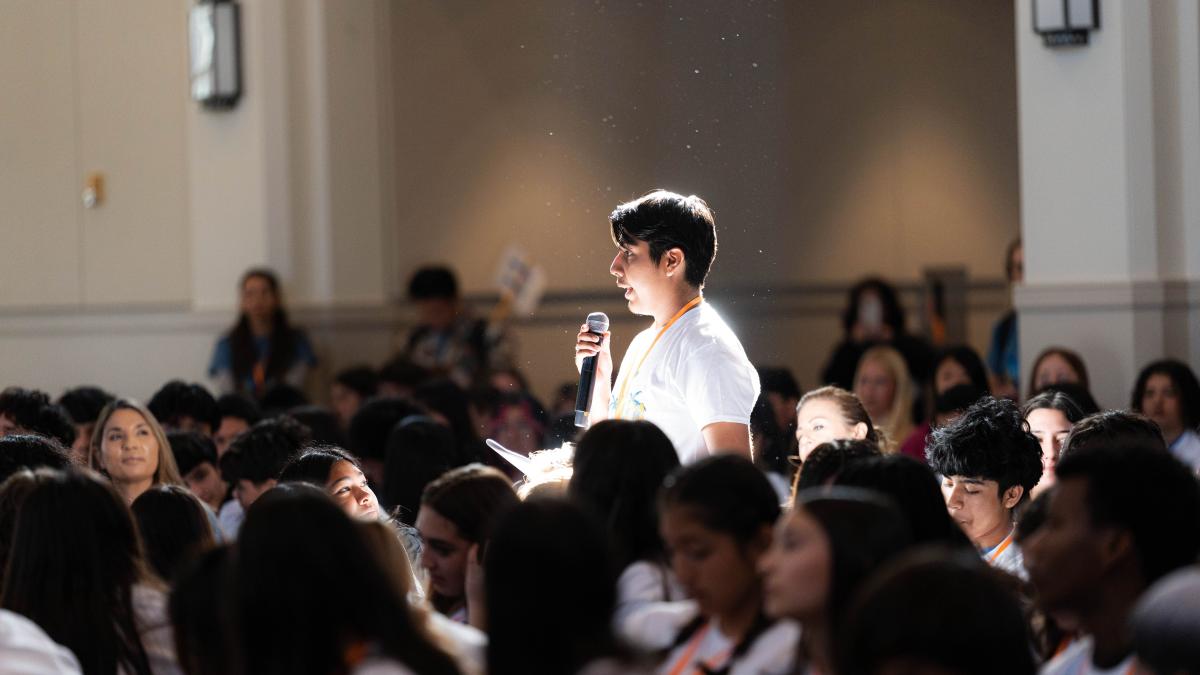
A student asks a question in a ballroom

The AVID 9th Grade Leadership Conference gave Orange County ninth graders a glimpse of college life.

Increasingly, Harshman has seen students leave the conference realizing they want that exact environment, and over the years, she has witnessed tangible outcomes, with more teachers and students becoming familiar with, applying for and enrolling in The Claremont Colleges.

This year’s conference featured panels and workshops led by a mix of Pomona students, staff and faculty, with approximately 50 members of Pomona’s community participating. Sessions included discussions with admissions staff and conversations in affinity spaces where Pomona students shared lived experiences.

The lessons shared ranged from practical to profound. Students discussed the long-term impact of social media posts, the importance of setting goals, the necessity of writing down concrete plans and more.

Assistant Director of the Native Indigenous Resource Center Joshua Thunder Little led a workshop on local tribal lands and cultural awareness, sharing Tongva/Gabrielino perspectives and introducing the concept of Kuuyam, meaning “guest” in the Tongva/Gabrielino language.

“The AVID conference was a wonderful experience to engage with high school students and prepare them for critical thinking,” Little says.