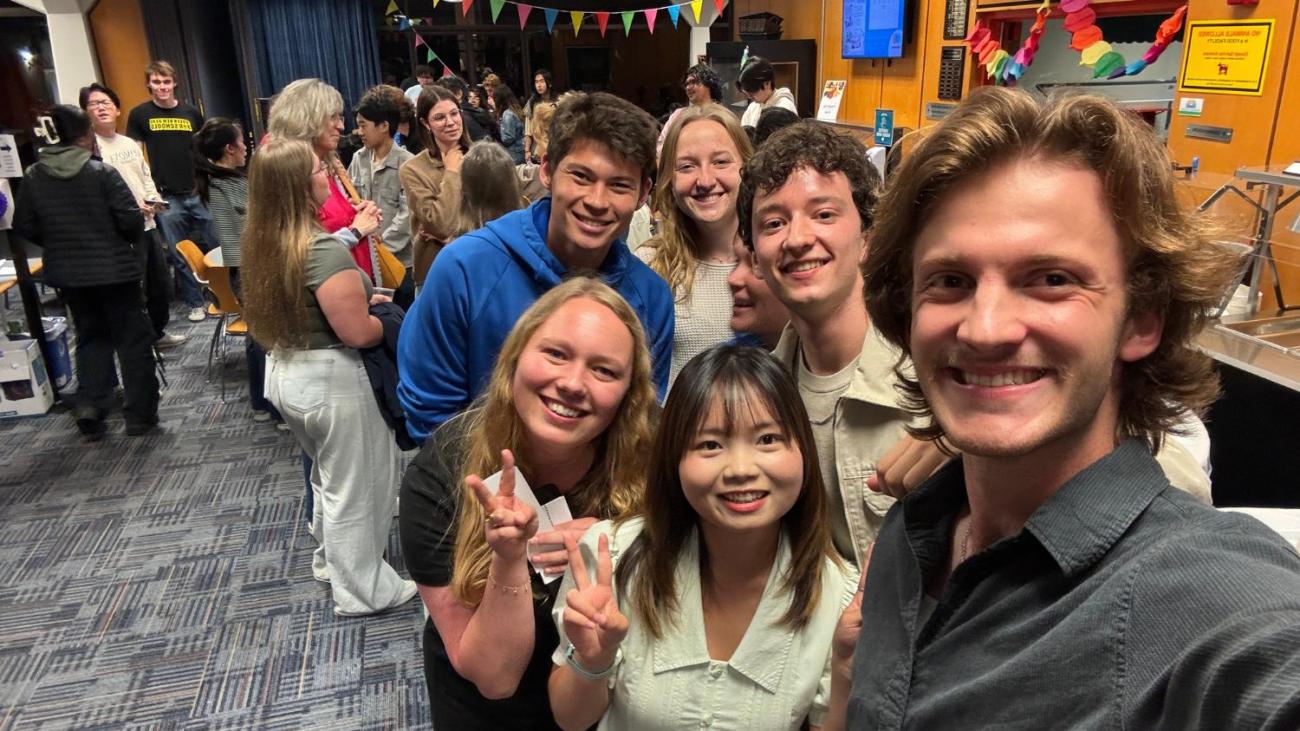
One last chance to say it — merci, gracias, danke and goodbye. Language residents hosted a farewell party where students shared memories and heartfelt goodbyes to Oldenborg.
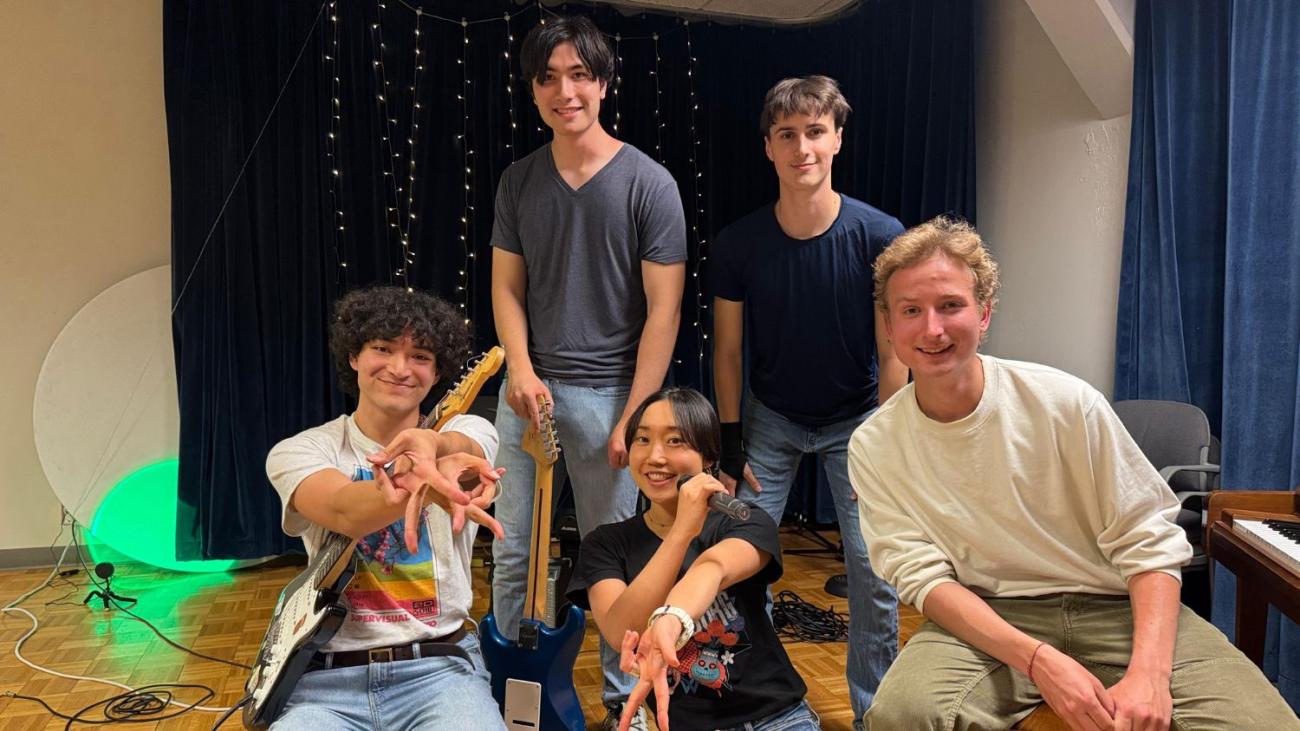
Live bands, a photo booth, letter writing and more marked “Bye Bye Oldenborg,” a joyful farewell to a beloved campus home.
Air conditioning. A suite. Living with three of my closest friends.
Oldenborg was the best-case housing situation for us as rising sophomores at Pomona College. The language immersion aspect sounded good on paper, but I didn’t expect it to become the part I’d miss the most. After nearly a full school year here, I’m sad to see it go.
The Oldenborg Center for Modern Languages and International Relations has been Pomona’s language residence hall for 60 years, built on one straightforward premise: the best way to learn a language is to immerse yourself in it. Students sign up for a room and a language, and community forms around that shared commitment — through language tables at lunch, cultural programming and the general understanding that everyone wants to be here. The language tables will find a new home next fall, but the students are candid about the lasting impact of Oldenborg and the memories they’ll carry with them. That sense of belonging clearly showed up when Oldenborg language residents hosted a goodbye party for students on April 22.
“There’s hardly any other space where I can be so in touch with my culture,” says Suvia Li ’28, a regular at the Chinese table. “Everyone here chose to be here. They wanted this kind of environment.”
This intentionality is something residents return to again and again, and something I noticed too. Here, the learning exists beyond the tables and classrooms. Someone catches you in the hallway and teaches you a word in Portuguese. A phrase in Mandarin comes up over breakfast. I teach my suitemates Korean, which they use to say hello to my mom when I call her from our room.
French hall resident Beatrice Kim-Lee ’28 describes Oldenborg as a place where people who love language learning and want to live alongside others who feel the same way, sharing meals and building friendships. Michelle Zhang ’27, who lived in the Spanish suite her sophomore year, puts a finer point on how the dining hall creates a space to “connect over good food and bond with professors, friends and faculty.”
For Samarah Lunde ’29, a heritage Spanish speaker, Oldenborg has been a place to explore without pressure. The low-stakes atmosphere of the Spanish table lets her engage with a language she grew up with in a new context, while the proximity of other tables has given her room to wander into unfamiliar territory out of curiosity. “I can just casually learn how to speak,” she says of the Korean table. Because the language tables are open to all, regardless of fluency, students are able to connect and practice at a level comfortable for them.
Nursulu Burkitbayeva ’28, a language partner for the Russian program, calls Oldenborg “simply home.” She comes every Friday, sometimes teaches the alphabet to students just starting out, and counts move-in day as her favorite memory.
The building is coming down, and construction of the Center for Global Engagement (CGE) will begin later this year — carrying forward Oldenborg’s legacy of language immersion while opening new opportunities for interdisciplinary global learning. As one chapter closes, a new one begins.
Stop by while you can to say goodbye to the building if you haven’t had the chance yet! And I hope to see you next fall when the language tables will make the Blue Room in Frank Dining Hall their new temporary home.
This story is part of our “Dear Oldenborg” series, as Pomona College bids farewell to the center. Visit our webpage to read more.